The Framework That Outlasted Its Builder
Governance | Organizational Change | Portfolio Management
The Framework That Outlasted Its Builder
THE SITUATION
I built a governance framework designed to connect strategy to execution across a complex, multi-function organization. The framework was sound. It was also resisted — openly and persistently — by the groups closest to the work. The people most affected found reasons it didn't apply to them, pushed back on the standards, and made implementation harder than it needed to be.
Then leadership changed.
The new leadership wanted exactly what I had built. The people who had fought the framework hardest were now the ones implementing it. Word came back, eventually, that the framework had been adopted — by the same people who had worked hardest to prevent it.
I was no longer there when it happened.
WHAT I SAW
The resistance was not irrational. The groups being asked to change had built processes that worked for them. They could see exactly what they were losing and had no clear picture of what they were gaining. From where they stood, the framework looked like a step backward for their function so that corporate could check a box.
What I understood — and what the resistance confirmed — was that governance built on personality depends on its champion. When that champion moves on, the framework moves with them. The people who resisted find their opening. The standards erode. The organization reverts to the path of least resistance, which was always waiting.
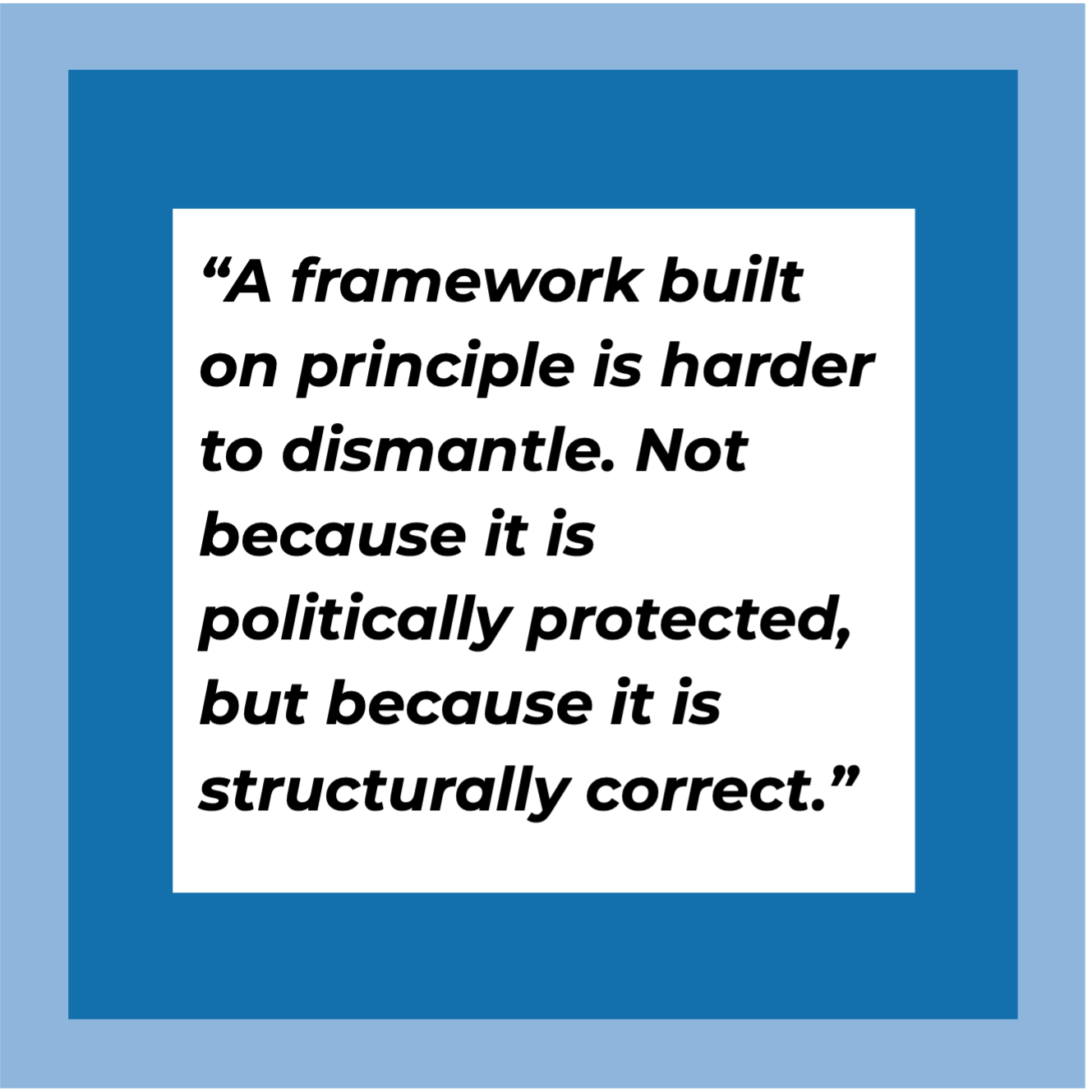
A framework built on principle is harder to dismantle. Not because it is politically protected, but because it is structurally correct.
The framework I built was not designed around my preferences or my authority. It was designed around what the organization needed to make good decisions at scale. When new leadership arrived and asked what good looked like, the answer already existed. When the people who resisted it most were asked to build something better and couldn't, they returned to what was there.
WHAT I DID
I designed the framework around three principles that I have carried into every governance engagement since.
First, governance built on principle rather than personality. Every requirement in the framework had to be traceable to an organizational need, not to a preference of the governance team or the sponsoring executive. When the sponsor changed, the need remained. The framework survived because the argument for it survived.
Second, co-design with the groups most likely to resist. Not consensus — co-design. The people who would live inside the framework had a genuine role in shaping how it operated. Their input changed the outcome in ways they could see. When a resistant group can trace a requirement back to a conversation they participated in, it becomes something they helped build rather than something imposed on them.
Third, patience with the timeline. Governance built on principle often loses the early battles. The vindication arrives quietly, through someone who was in the room, long after the argument has ended. Building a framework that will still be standing when you are no longer there to defend it requires accepting that the credit may arrive the same way.
WHAT CHANGED
The framework was adopted — eventually, completely, by the people who resisted it most. That adoption was not driven by mandate or by my continued presence. It was driven by the fact that when the organization looked for an alternative, it found that what had been built was correct.
The longer-term outcome was a governance structure that became part of the organizational operating model rather than a project artifact. It informed how resources were allocated, how portfolio decisions were made, and how risks were escalated. Those capabilities remained after the leadership change that triggered the adoption, and after subsequent changes as well.
The lesson is one I return to consistently: the PMO's job is not to be right in the room. It is to build something that is still right after the room has changed.
WHAT THIS ILLUSTRATES
Executive Decision™ Framework: Governance by Principle + Adaptive Leadership
This story illustrates what the Executive Decision™ Framework means by Governance by Principle: principles that endure, accountability that doesn't depend on a single champion, and a governance operating system that serves the organization rather than the person who built it. The eventual adoption by the same people who resisted hardest is the clearest evidence that the framework was built correctly — because correct frameworks survive the departure of their builders.
Adaptive Leadership, the fifth pillar of the framework, is also visible here: transformation becomes a capability, not an event, when the governance structure is designed to outlast any single leadership configuration. The organization that adopted this framework didn't just gain a process. It gained the capacity to govern itself consistently across leadership transitions.